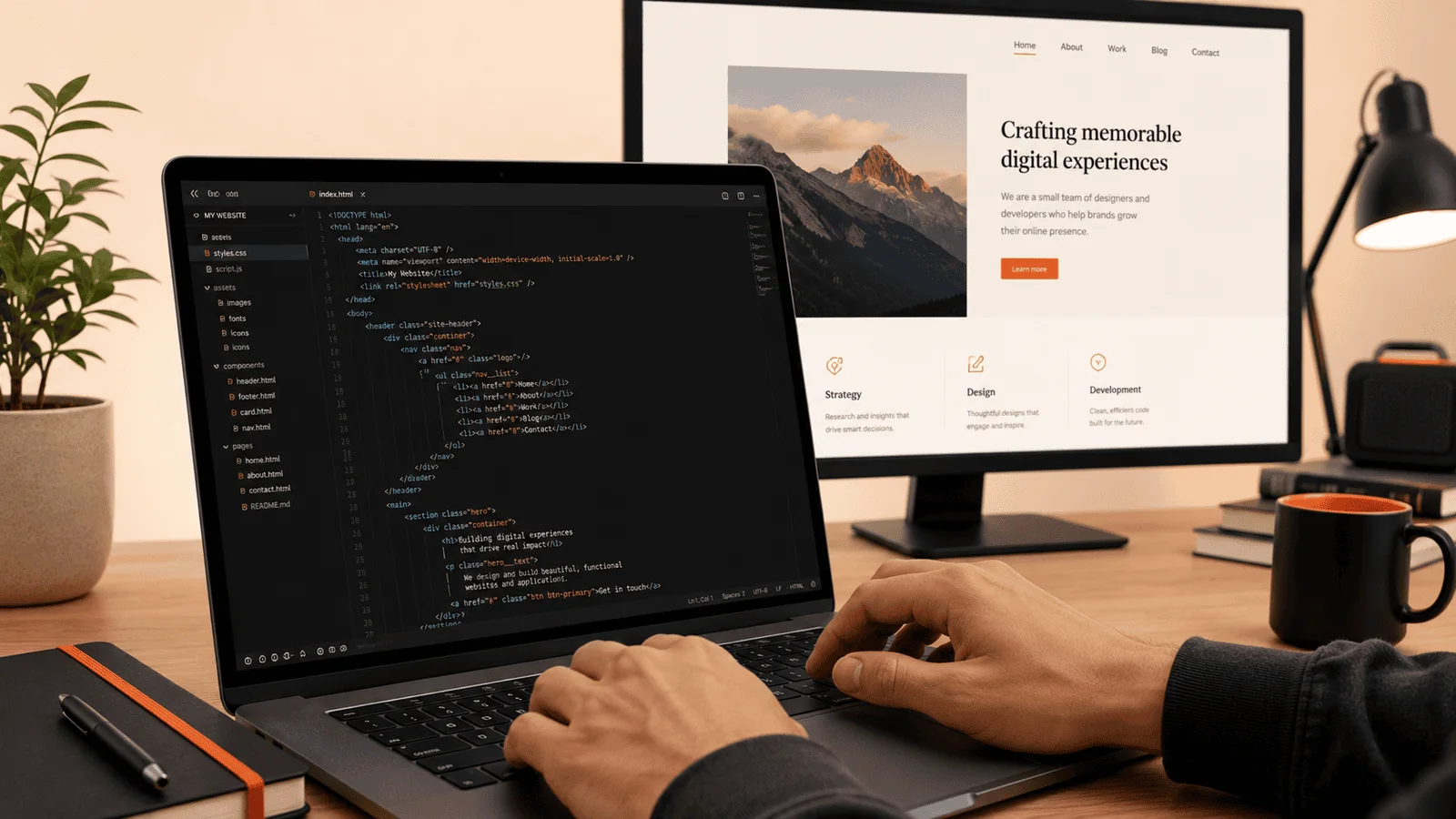


WordPress remains dominant in market share, but the platform landscape has evolved enough that the comparison against alternatives deserves fresh consideration rather than default assumption.
WordPress Excels at Content-Heavy Sites With Extensive Plugin Needs
WordPress's massive plugin ecosystem and content management maturity make it particularly strong for content-heavy sites needing extensive, flexible functionality beyond basic page presentation.
Modern Alternatives Offer Better Performance Out of the Box
Newer platform alternatives built with performance as a core design principle often outperform WordPress's default configuration without significant additional optimization work.
Security Maintenance Burden Differs Considerably Between Platforms
WordPress's popularity makes it a frequent target requiring ongoing security maintenance, while some alternatives' architecture reduces this maintenance burden by design.
What This Means for Platform Selection Today
WordPress remains appropriate for content-heavy, plugin-dependent sites, while alternatives increasingly deserve consideration for performance-critical or lower-maintenance-burden priorities.
Trying to decide between WordPress and alternatives for your project? Website Development
How to Evaluate Whether Your Site Needs WordPress's Plugin Ecosystem
Honestly assessing whether your specific functionality needs require WordPress's extensive plugin availability, or whether a more focused alternative would adequately serve your actual requirements, reveals whether the platform's core strength matters for your situation.
This assessment matters because many sites adopt WordPress by default without needing its extensive plugin ecosystem, missing opportunity to consider alternatives that might better serve their more limited actual requirements.
Why Total Cost of Ownership Should Include Ongoing Maintenance
WordPress's plugin update management and security maintenance represents real ongoing cost beyond initial setup, making total cost comparison against alternatives incomplete without accounting for this ongoing maintenance burden.
How Developer Talent Availability Affects Platform Choice
WordPress's large developer talent pool makes finding qualified help easier than for some newer, more niche alternatives, a practical consideration worth weighing alongside pure technical capability comparison.
Why Headless WordPress Approaches Bridge Traditional and Modern Architecture
Headless WordPress implementations combine WordPress's familiar content management with modern frontend architecture flexibility, offering a middle path between traditional WordPress and fully alternative platforms.
A Reasonable Way to Decide Between WordPress and Alternatives
Weighing plugin ecosystem need, performance priority, maintenance burden tolerance, and available developer talent together produces a more informed platform decision than defaulting to either WordPress or alternatives out of habit.
How E-Commerce Needs Affect the WordPress Versus Alternatives Decision
WordPress paired with e-commerce plugins provides considerable flexibility, though dedicated e-commerce platforms sometimes offer more streamlined, purpose-built shopping experience for online retail-focused businesses.
This distinction matters because businesses primarily focused on online sales, without extensive content marketing needs, may find dedicated e-commerce platforms serve their actual core need more directly than WordPress with added commerce functionality.
Why Multisite Management Capability Differs Across Platform Options
Organizations managing multiple related websites benefit from comparing multisite management capability across WordPress and alternatives, since this capability varies considerably between platform options.
How Migration Complexity Affects the Decision to Switch Platforms Later
Understanding migration complexity for each platform option before committing helps avoid lock-in that would make a future platform change considerably more difficult than initially anticipated.
Why Community and Ecosystem Maturity Provides Practical Long-Term Value
WordPress's mature community and extensive documentation provide practical troubleshooting value that newer, smaller-community alternatives sometimes don't yet fully replicate.
A Reasonable Way to Pilot Test a Platform Alternative Before Full Commitment
Building a smaller pilot project on an alternative platform before committing your primary site validates real-world fit before larger-scale platform commitment.
How Vendor Lock-In Risk Differs Between WordPress and Proprietary Alternatives
WordPress's open-source foundation reduces vendor lock-in risk compared to some proprietary alternative platforms, a consideration worth weighing for businesses concerned about long-term platform independence.
Why SEO Capability Comparison Deserves Careful Evaluation Beyond Reputation
WordPress's reputation for strong SEO capability, built through years of plugin development, should be compared against current alternative platform SEO capability rather than assumed based purely on historical reputation.
How Theme and Design Flexibility Compares Across Platform Options
WordPress's vast theme ecosystem provides considerable design flexibility, though modern alternatives increasingly offer comparable design capability through different technical approaches.
How Custom Development Cost Compares Between WordPress and Alternative Platforms
Custom development built on WordPress's familiar architecture often costs less than equivalent custom work on newer, less widely known alternative platforms, given broader developer familiarity with WordPress conventions.
This cost consideration matters for businesses requiring significant custom functionality beyond what off-the-shelf plugins provide, since developer availability and familiarity directly affects project cost and timeline predictability.
Key Takeaways
- WordPress's massive plugin ecosystem makes it particularly strong for content-heavy sites needing extensive functionality.
- Modern platform alternatives built with performance as core design often outperform WordPress's default configuration.
- WordPress's popularity makes it a frequent security target requiring ongoing maintenance some alternatives reduce by design.
- Many sites adopt WordPress by default without needing its extensive plugin ecosystem.
- Total cost comparison should include WordPress's ongoing plugin update and security maintenance burden.
Frequently Asked Questions
Is WordPress still the right default choice for most websites?
Not automatically — it excels for plugin-dependent, content-heavy sites, but alternatives deserve consideration for other priorities.
Do modern alternatives outperform WordPress?
Often in default configuration, yes — though WordPress can be optimized to compete with additional work.
Does WordPress require more ongoing security maintenance than alternatives?
Often yes — its popularity makes it a frequent target, requiring ongoing plugin and core updates.
Does developer talent availability matter for platform choice?
Yes — WordPress's large talent pool makes finding qualified help easier than for niche alternatives.
Can WordPress be used with modern frontend architecture?
Yes — headless WordPress combines familiar content management with modern frontend flexibility.
Does WordPress serve e-commerce needs well compared to dedicated platforms?
Reasonably, though dedicated e-commerce platforms sometimes offer more streamlined shopping experience.
Does multisite management capability vary across platform options?
Yes — organizations managing multiple sites should compare this capability carefully.
Should we understand migration complexity before committing to a platform?
Yes — this helps avoid lock-in that would make future changes considerably harder.
Does WordPress's community maturity provide practical value?
Yes — extensive documentation and community support provide troubleshooting value newer alternatives may lack.
Does WordPress reduce vendor lock-in risk compared to proprietary alternatives?
Yes — its open-source foundation reduces lock-in risk compared to some proprietary platforms.
Should WordPress's SEO reputation be assumed or verified against current alternatives?
Verified — comparison should be based on current capability, not purely historical reputation.
Does WordPress still offer more design flexibility than alternatives?
Its vast theme ecosystem provides considerable flexibility, though alternatives increasingly offer comparable capability.
Should we evaluate hosting requirements when comparing WordPress against alternatives?
Yes — hosting complexity and cost differ meaningfully between platform options.
Does WordPress core update frequency affect maintenance planning?
Yes — regular core and plugin updates require ongoing maintenance attention regardless of site complexity.
Does custom development cost differ between WordPress and alternative platforms?
Often yes — WordPress's broader developer familiarity can reduce cost versus newer alternatives.
Should we consider long-term platform viability, not just current capability?
Yes — evaluating a platform's trajectory and community health matters for long-term investment decisions.
Does WordPress support headless architecture for modern frontend needs?
Yes — WordPress can serve as a headless content backend while using modern frontend frameworks.
Should content editors' comfort level factor into platform choice?
Yes — WordPress's familiar editing interface may matter for teams with less technical comfort.
Does plugin quality vary considerably within the WordPress ecosystem?
Yes — careful plugin vetting matters given quality variation across the vast ecosystem.
Should we test page speed directly rather than assuming based on platform reputation?
Yes — actual measured performance matters more than general platform reputation assumptions.
Does WordPress support multilingual content well?
Reasonably, through established plugins, though native multilingual support varies by alternative platform too.
Should we consider editorial workflow needs when comparing platforms?
Yes — approval chains and scheduled publishing capability differ across platform options.
Does WordPress support role-based access control for larger teams?
Yes, through native and plugin capability — though granularity varies compared to some alternatives.
Should we prototype on both WordPress and a alternative before final commitment?
Yes, when time allows — hands-on comparison reveals practical fit better than feature lists alone.
Should long-term budget planning account for platform-specific ongoing costs?
Yes — hosting, plugin licenses, and maintenance costs differ meaningfully between platform choices over time.
Should we consult a developer before committing to either WordPress or an alternative?
Yes — experienced technical input helps validate whether the chosen platform fits actual requirements.
Should we periodically revisit our platform choice as our needs evolve?
Yes — what fit well initially may not remain optimal as business requirements change over time.
Should our decision documentation be revisited if key personnel change?
Yes — documented reasoning helps new decision-makers understand context without starting evaluation from scratch.